

As humans, we’re sensory beings. We’re also generally bad at judging precise distances and directions. We want to see context and proximity, rather than read directions to figure it out. Maps help us navigate this when driving, or, booking accommodation.
No matter the type of traveller, and how complex their booking journey, at some point every guest will consider your location when they decide to stay with you or not. In fact, location and access are one of the key barriers in the booking decision. In a research study conducted by the Baymard Institute on travel accommodation UX, 95% of prospective guests actively engage with side-by-side interactive maps to verify property location and proximity before committing to a reservation.
Springnest feature spotlight: Map Pages
With clean and intuitive design across desktop and mobile, intentional map marker categories, and simple editing, Springnest map pages give properties a place on their websites to leverage their location and a direct booking tool.
Learn how Map Pages workThree reasons a map page will contribute to more direct bookings:
Remove fear and uncertainty: the two of the biggest drivers of booking abandonment.
Each potential guest has a string of concerns they work through during research. The concern could be “Is this close enough to the airport?”, “are there any good cafés in walking distance to work from”, “is there enough for the kids to do in the area if we stay here?” or “Is there a town nearby to buy food and fuel up before we head into the mountains?”. Your website’s job is to rule out as many of these concerns as possible. Where you are in context of other points of interest, is one of those fears. This can be as simple as showing your location’s proximity to the airport, mapping out the family friendly wine farms in your valley, or building out a map of co-working spaces in your city, within close proximity.
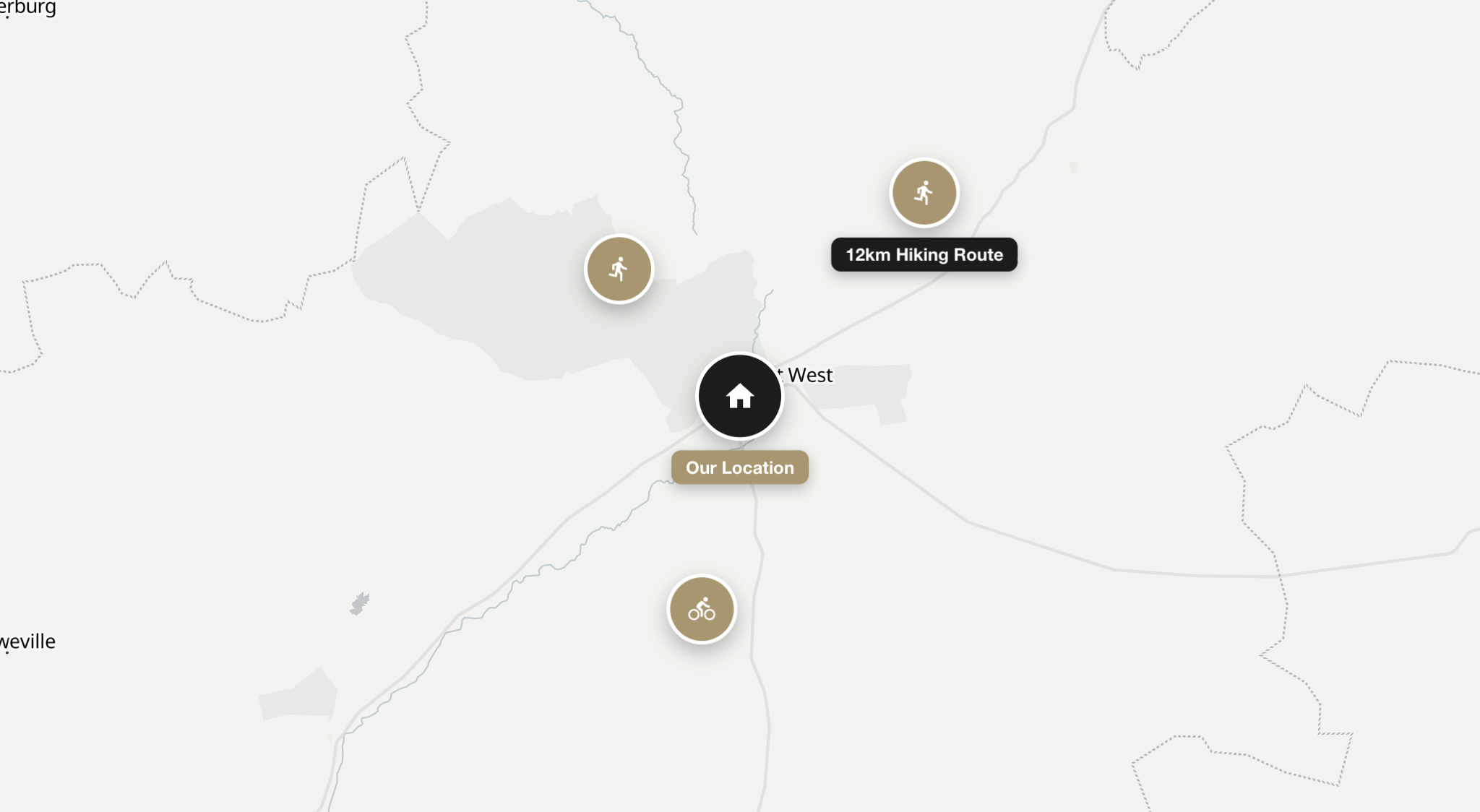
Give your bookers less reason to tab-hop
Imagine a visitor browsing your website in one tab, with Google Maps (or even Booking.com) open in another tab, to figure out where your property is located in context of attractions, landmarks, or airports. Inevitably, their attention and focus will become so stretched that they will either veer off the booking path entirely, or they will be captured by an ad or offer while jumping between tabs (Our on-screen attention span plummeted from 2.5 minutes in 2004 down to roughly 47 seconds. Scary.) Bottom line here: if your website’s location page answers these questions for them, the less likely they are to tab-hop, and the less likely they are to abandon the booking journey on your site.
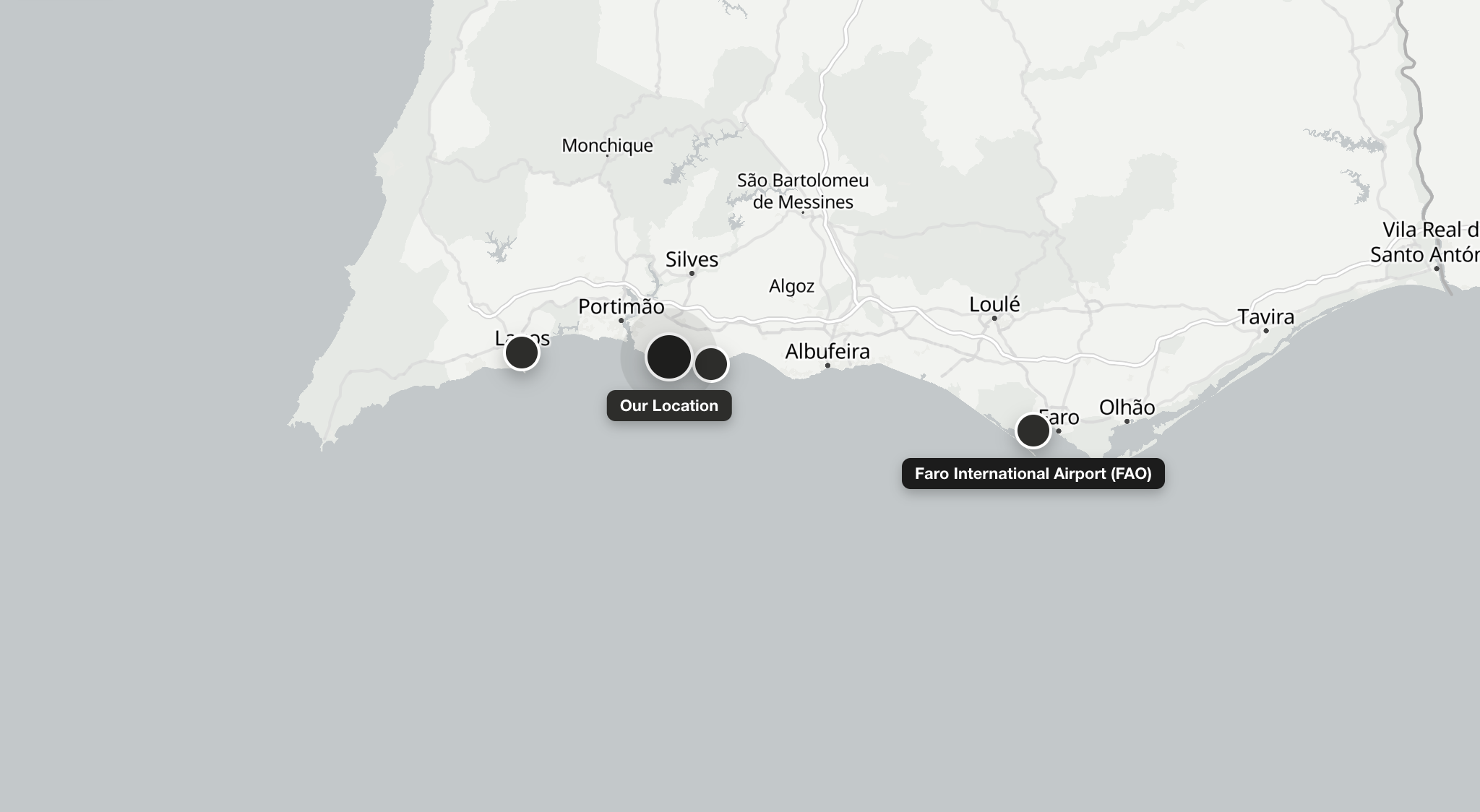
Beat OTAs at their own game: destination context and neighbourhood breakdowns
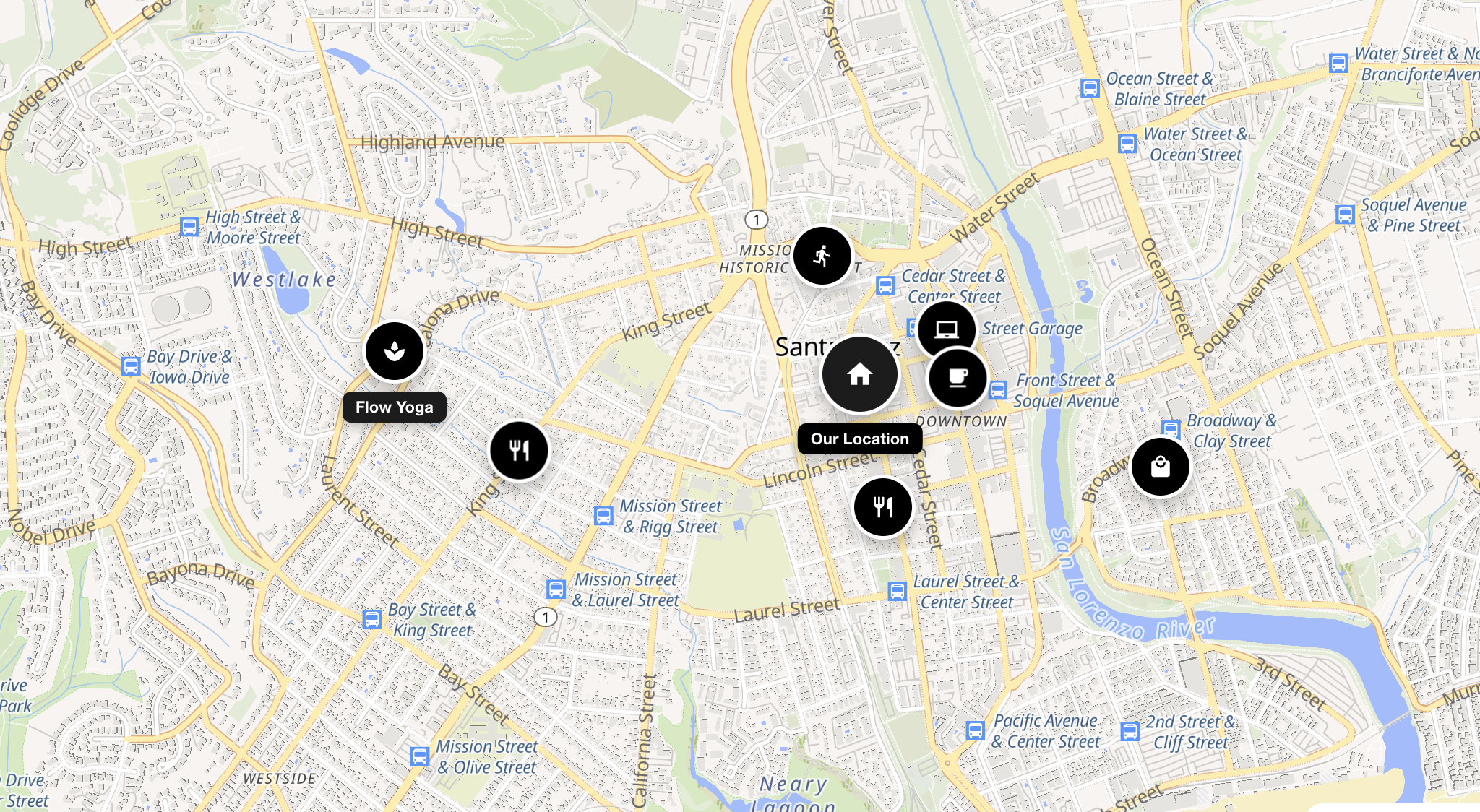
OTAs have figured out the value of creating destination guides and neighbourhood guides, and some of them (read Airbnb) do it really well. Building your own interactive map with points of interest levels the playing field for your property. Part of your value as a host is knowing your area. Why wait until your guests are checked in before offering them the gift of personalised local recommendations? You know that the pizzeria down the road have been making the best margaritas for 22 years, that the pharmacy around the corner is open 24/7, that guests often say “I didn’t realise you were this close to the beach”. Sharing this expertise as a beautiful and interactive guide on your website will do more than just show that you have a good location; it will tell your prospective guests that they are staying with a property who understands their destination. That builds trust. Trust leads to bookings.
Where to start
Maintaining an interactive map can be a high-value low-effort marketing activity, compared to writing blog articles or maintaining a destination events calendar. Here’s your blueprint:
Step 1: Think about your typical guests, build your list. Who are they, and where do they go during their stays? Catering for business travellers? List business parks or conference venues. Catering for families? List family-friendly parks and activities. Catering for people visiting a nearby national park? List the gates, shops, service stations or lookouts that will be valuable to them.
Step 2: Write a short blurb for each (while we’re generally conservative about using AI to write marketing copy, this is a pretty safe and sensible use case, since the AI will be able to do research on specific places and write a short unique blurb in a flash).
Step 3: Build your map. Start with your own location, and add the markers from your list, using their relevant categories, and add their blurbs.
Bonus tip: Adding everything can be almost as ineffective as adding nothing. Step 1 above is key. Instead of adding 50 markers for every grocery store, bus stop and KFC, start with the 10 places you will make your guests go “Ah, if we stay here we can easily get to X” or “This is really convenient, we’ll have a lot of Y around us”.
This was written by a human 👋
We strive to be transparent about when and how AI is used during communication and content creation by our team.
- This article was conceptualised, written, proofed and published by a human.
- Generative AI was used for researching and validating the statistics shared in this article.